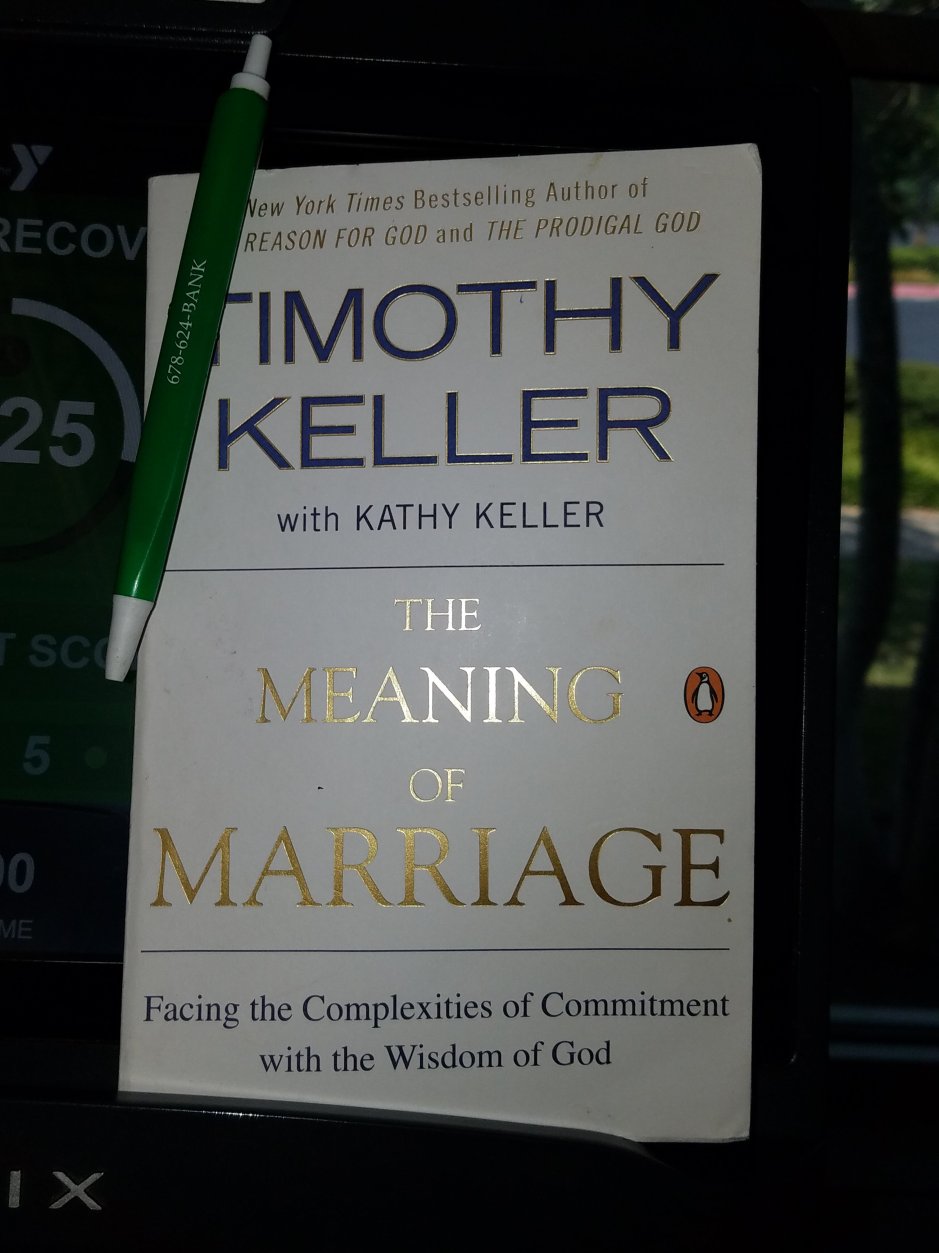
The Meaning of Marriage – Chapter 2 highlights – “The Power for Marriage”

I am continuing to dig in to Timothy Keller’s book, “The Meaning of Marriage.” It is excellent, chock full of wisdom and encouragement. Last week I shared highlights from the first chapter. You can read those here. And let me urge you again to get your own full copy of the 300+ page book.

One of the most important (if not THE most important) chapters on marriage in the Bible is found in Ephesians 5. When examining Ephesians 5, Keller writes, “Immediately after discussing the Spirit-filled life, Paul turns to the subject of marriage, showing the tight connection between marriage and the life in the Spirit. And this connection teaches us two things. First, the picture of marriage given here is not of two needy people, unsure of their own value and purpose, finding their significance and meaning in one another’s arms. If you add two vacuums to each other, you only get a bigger and stronger vacuum… If we look to our spouses to fill up our tanks in a way that only God can do, we are demanding an impossibility.” (pg 49-50)

In Ephesians 5, Paul charges both the husband and the wife with self-sacrificing responsibilities to serve their partner in marriage. Each of their responsibilities have unique struggles. The wife gives of herself in her submission, while the husband gives of himself in his love. But, both are servants, putting the other’s needs before his or her own.

And in this we see the gospel again lived out in our marriages. In essence, the gospel message is this: “You are so lost and flawed, so sinful, that Jesus had to die for you, but you are also so loved and valued that Jesus was glad to die for you.” (pg 54)

Please read that sentence again and let it really sink in. Let this truth impact your marriage, recognizing your own brokenness and need for help, forgiveness, love and grace. Let this truth both humble you and lift you up.

Humans “were created to worship and live for God’s glory, not our own. We were made to serve God and others. That means paradoxically that if we try to put our own happiness ahead of obedience to God, we violate our own nature and become, ultimately, miserable.” (pg 57-58) How true! And how often I see this played out in my own life. How about you?

The problem is that marriage is a union of two self-centered people. What ends up happening is that both people think the other person has the bigger problem. It is only when both spouses say, “I’m going to treat my self-centeredness as the main problem in the marriage,” that a couple can fully enjoy a great marriage. (pg 64)

So, what should you do if your spouse doesn’t recognize that his or her self-centeredness is a problem? Then, you have to work on you. You have to recognize your own sinfulness and selfishness and begin working on your own heart issues. And, once again, this is only fully possible through the power of the Holy Spirit at work in you and by having a proper reverence for Christ. (Look again at Ephesians 5:18-21)

As Keller writes, “Only God can fill a God-sized hole. Until God has the proper place in my life, I will always be complaining that my spouse is not loving me well enough, not respecting me enough, not supporting me enough.” (pg 73)

Or in my life: When God fills my God-sized hole, Bill doesn’t have to. Ultimately, the solution to my marriage struggles isn’t found in getting Bill to fill the hole in my heart, but in getting my heart so filled with God, that HE fills the hole in my heart.

As Keller concludes,

“It is possible to feel you are “madly in love” with someone, when it is really just an attraction to someone who can meet your needs and address the insecurities and doubts you have about yourself. In that kind of relationship, you will demand and control rather than serve and give. The only way to avoid sacrificing your partner’s joy and freedom on the altar of your need is to turn to the ultimate lover of your soul.” (pg 77)

Let’s journey on this road together, seeking first God’s kingdom and His righteousness, loving others because God first loved us. 

— TWIG

The Meaning of Marriage – Chapter 1 highlights

In the summer of 2018, I started reading Timothy Keller’s book, The Meaning of Marriage. It is fantastic. I mean, really, really good. I highly recommend it.

It is also over 300 pages long. Can I just admit here that I wish that books were short? Please, if I ever write a 300-page book, will you please remind me of this. I much prefer to read three one-hundred page books or two one-hundred-fifty page books, than one three-hundred page book. I’m sure there’s some cost-effective reason why authors are encouraged to write one lengthy book, but I have such a hard time finishing long books. Anyway … I digress … You probably hate reading long blog posts and watching long YouTube videos. (Oh, yeah, I generally dislike those, too.)

But back to the subject at hand, this book is so fantastic, I thought I’d share some highlights from each chapter. I hope this would encourage you to buy your own copy and read it slowly and meditatively.

Chapter 1, “The Secret of Marriage.”

Keller begins by explaining the cultural shift that has happened in the American view of marriage. During the Enlightenment Age of the 18th and 19th centuries, people’s attitudes toward marriage began to change. “The meaning of life came to be seen as the fruit of the freedom of the individual to choose the life that most fulfills him or her personally. Instead of finding meaning through self-denial, through giving up one’s freedoms, and binding oneself to the duties of marriage and family, marriage was redefined as finding emotional and sexual fulfillment and self-actualization.” (p. 21)

In a 2002 study by the National Marriage Project entitled, “Why Men Won’t Commit,” by Barbara Dafoe Whitehead and David Popenoe, the authors discovered that men were looking for the “perfect soul mate,” with whom they were very compatible. There were two key factors in compatibility. Secondarily, attractiveness and sexual chemistry, and primarily, compatibility. Compatibility “above all meant someone who showed a willingness to take them as they are and not change them.” … “If you are truly compatible then you don’t have to change.” (p. 23-24)

Historically, though, men recognized that getting married would demand a great deal of change. Keller asserts that one great purpose for getting married is in fact to change men, to help men to be more interdependent and to grow in communication, support and teamwork skills. Marriage is designed to “change their natural instincts, to reign in passions, to learn denial of one’s own desires, and to serve others.” (p 26-27)

(I would add here that marriage not only improves the man in this way, but also the woman. I have grown more as a married woman, learning to deny my own desires and to serve others, than I could learn as a single person.)

Unfortunately, this desire to be fully accepted exactly how we are has helped fuel the pornography epidemic of America. Pornographic images serve a person’s physical lusts without any of the responsibility and maturity that marriage, by definition, requires. As Keller puts it, “A marriage based not on self-denial but on self-fulfillment will require a low- or no-maintenance partner who meets your needs while making almost no claims on you. Simply put – today people are asking far too much in the marriage partner.” (p 30)

“Modern people make the painfulness of marriage even greater than it has to be, because they crush it under the weight of their almost cosmically impossible expectations. … At one time we expected marriage and family to provide love, support and security. But for meaning in life, hope for the future, moral compass, and self-identity, we looked to God and the afterlife. Today, however, our culture has taught us to believe that no one can be sure of those things, not even whether they exist. … We look to sex and romance to give us what we used to get from faith in God.” (p. 36)

Keller ends with the beautiful “secret” of God’s design for human marriage. “The reason that marriage is so painful and yet wonderful is because it is a reflection of the gospel, which is painful and wonderful at once. The gospel is this: We are more sinful and flawed in ourselves than we ever dared believe, yet at the very same time we are more loved and accepted in Jesus Christ than we ever dared hope. This is the only kind of relationship that will really transform us. Love without truth is sentimentality; it supports and affirms us but keeps us in denial about our flaws. Truth without love is harshness; it gives us information but in such a way that we cannot really hear it. God’s saving love in Christ, however, is marked by both radical truthfulness about who we are and yet also radical unconditional commitment to us.” (p. 44)

To China with Love

I hope you enjoy the video I made of our trip to China. I know it’s a little long and I have a short attention span, but trying to condense 12 days of the most amazing trip ever to the most exotic place ever is a little hard. Imagine it’s 1.5 minutes per day and maybe you’ll understand!

If you’d like more information about teaching English online with VIPKID, please click my referral link here.

The Bible is a LOVE story and a WAR story

As an author and an avid book reader, I am fascinated by the fact that God has written down His redemption story in a book that we can hold today in our hands. How amazing is that?

I freely admit that I don’t like romance novels or war stories. I’ve tried reading both, but I just can’t ever seem to get into them. And yet, the Bible is the greatest love story and the greatest war story ever told.

The Bible is a great love story from beginning to end. There is love within the unity of the Godhead. There is love between God and His creation. There is the relentless, unconditional love of God poured out to rescue sinful man by the death of His own Son, Jesus, in our place. This love story began in the garden of Eden and continues to present day.

The Bible is also a great war story from beginning to end. Satan and his fallen angels waging war against God’s surpreme creation, man. The battle within our own minds between selfishness and sacrifice. The battle between good and evil at the resurrection of Christ, Jesus triumphing over Satan, the prince of the air. This war story began in the garden of Eden and continues to present day.

Where do we fit in to this great love story and war story?

We are not the hero. God is. But we do have an important part to play in this great, true tale.

God demonstrates His love for us in that while we were still sinners, Christ died for us, making us not only His children, but His bride. (Romans 5:8, 1 John 4:10, John 1:12, Revelation 21:9)

God invites us to fight the good fight of faith, resisting the devil and forcing him to flee, taking up the sword of the Spirit to wage the righteous war. (1 Timothy 6:12, James 4:7, Ephesians 6:17)

Do you believe that you are an important part of the greatest love story and the greatest war story ever told? Or does it feel more like a children’s fairy tale?

Remember – what you believe impacts how you think and live. Believe rightly, that you may live rightly. Love on and Fight on. I’m with you.

TWIG

Different Ways of Cooking Fish and Potatoes

I like just about any way of preparing potatoes. Potato salad, baked potato loaded with toppings, au gratin potatoes, mashed potatoes, waffle fries from Chick-fil-a. I love them all.

But, fish … not so much. I’m picky about fish. I don’t like it raw or blackened or baked or smoked. I pretty much only like it battered and fried (with the exception of tuna salad sandwiches.)

And I’m picky about what kind of fish. I pretty much only like cod, like you find in McDonald’s fish sandwiches and Long John Silver’s fish fillets (with the exception of tuna salad sandwiches … and fresh red snapper fried and served in fish tacos.)

The other day the idea popped into my mind that our “pet sins” are kinda like fish and potatoes. There are some sins that appeal to me, while others don’t.

Wasting time watching hour upon hour of sports or blowing a afternoon shopping aimlessly at the neighborhood mall has no appeal to me.

Binging on Netflix documentaries and Facebook posts is calling my name. (Just one more …)

Getting in a fist fight or stealing from the neighborhood convenience store has absolutely no interest for me.

But, turning a cold shoulder on my husband to “teach him a lesson” or yelling at my kids when they’re moving too slow for my liking, will get me every time.

I need to be careful about judging other people’s “sins of choice” and remember that all of my good deeds are but filthy rags in comparison to God’s perfect glory.

I need to remember that any one of our sins are enough to separate us from a holy God.

Like the Pharisee and the Tax Collector in Luke 18, the Pharisee’s greatest sin was the sin of pride. And the greatest answer to that sin is to humble myself before God, asking Him to have mercy on me, a sinner.

“Two men went up into the temple to pray, one a Pharisee and the other a tax collector. The Pharisee, standing by himself, prayed thus: ‘God, I thank you that I am not like other men, extortioners, unjust, adulterers, or even like this tax collector. I fast twice a week; I give tithes of all that I get.’ But the tax collector, standing far off, would not even lift up his eyes to heaven, but beat his breast, saying, ‘God, be merciful to me, a sinner!’ I tell you, this man went down to his house justified, rather than the other. For everyone who exalts himself will be humbled, but the one who humbles himself will be exalted.” (Luke 18:10-14)

Playing with Lions

Yesterday, at my local Community Bible Study meeting, we were looking at Genesis 4 when Cain killed Abel, his brother. In Genesis 4:7, before Abel has been killed, God warned Cain, “If you do well, will you not be accepted? And if you do not do well, sin is crouching at the door. Its desire is contrary to you, but you must rule over it.”

The word, “crouching,” conjures up an image of a cat ready to pounce, doesn’t it? Well, apparently, I’m not the only one because our CBS leader proceeded to share a story of a man who was severely injured by his pet tiger.

Like Michal Prasek, a Czech man who was found dead in his own pet lion’s pen, we can underestimate the power of the “pets” in our lives. Today I’m asking myself, how am I naively playing around with a pet lion, thinking it’s just a sweet, little tame cub that won’t possibly hurt me, thinking that I’ve got control of it. But, really, that sweet, little cub is actually a lion just waiting for the right time to pounce. Like, 1 Peter 5:8 instructs us. “Be sober-minded; be watchful. Your adversary the devil prowls around like a roaring lion, seeking someone to devour.”

Remember, as my pastor is so fond of saying, “Sin will cost you more than you want to pay, take you further than you want to go and keep you longer than you want to stay.”

21 years ago

21 years ago, Thomas William Endraske was silently born, making his public entrance into the world. He was not welcomed with balloons or stuffed animals, but with tears. He was not greeted by scores of relatives, but this Mama Bear loved all six inches of his tiny, pink unmoving form.

His birth was the capstone of a two-week attempt to save his life, and my life will never be the same.

This baby boy’s life and death changed this mommy’s life for the better. I’d heard of grief before and I’d seen others grieve before, but this was my first experience with grief myself, and it prompted my first step onto a fork in the road ahead. I moved from a wider path of comfort to a narrower path of faith and obedience. And I’m thankful.

I wonder today how different my life would be if he’d never been conceived at all. Would I have ever adopted his brother, Nick? Would I have ever begun praying and studying and feasting on God’s Word? Would I have homeschooled his big sister Emily, willingly sacrificing my own comfort and time for hers? Would I now be a mother of four living children or would I have stopped after two? Would I believe without a doubt that children are the greatest blessing that God can ever give to a woman?

So today, on Tommy’s birthday, I say, “Thank You, God, for creating him.”

“Worthy are you, our Lord and God, to receive glory and honor and power, for you created all things and by your will they existed and were created.” Revelation 4:11

I’ve written a book called, “A Child Of Promise” for parents who are continuing their pregnancy after they know something is wrong with their unborn baby. It is available on Amazon. Today and tomorrow, in honor of Tommy’s birthday, the Kindle version is available at a discounted rate.

Do hard things

Today I’m telling myself to do hard things.

Hard things like picking up after myself and after my kids.

Hard things like washing laundry and cooking dinner and taking the dog for a walk.

Hard things like putting my phone away and going to sleep at night.

Hard things like reading a story to my kids and praying with them at bedtime.

Hard things like striking up a conversation with a stranger or praying for my waitress.

Hard things like really listening and really caring about what I hear.

Today I’m telling myself to do hard things. What hard thing do you need to do today?

On selfishness

Early last Tuesday morning, I was packing up to drive down to Pensacola, Florida with my oldest daughter and my two youngest children. My oldest daughter is dating a young man who is stationed there for the Navy and she invited me to join her. (Yay! What a wonderful opportunity!)

We were trying to leave at 7 a.m. and I was racing around looking for any final things we needed to bring. My husband was sitting at the dining room table reading his Bible – usually a very praiseworthy thing in my eyes. And then it happened. He asked me to get him a cup of coffee.

The thing is, every morning before I teach online, I make him a cup of coffee to take with him to work. It’s just one tiny thing I can do to serve him and let him know how much I appreciate him.

But that particular Tuesday morning, boy, it made me mad. Here I was, rushing around to pack the car and grab last minute stuff for our trip, and he’s sitting there reading his Bible and he wants a cup of coffee.

Are any of you thinking, “Wow. That’s so selfish.”  I sure was.

[Before you read any further, please know that my husband and I have already discussed this and he encouraged me to post this.]

But here’s the deal, the real deal.

That’s me. That man sitting at the table reading his Bible while the rest of the family is rushing around — as painful as it is to share this with y’all — that’s me.

And, dare I say it aloud or type it out on my little phone keyboard, but I feel all super-spiritual while I’m sitting there. I’m thinking to myself, “They should’ve gotten up earlier. Why are they rushing around? They’re so unorganized.” Or some other such self-righteous thoughts.

Somehow it is so much easier to see the speck in someone else’s eye than the log in my own. I think Jesus talked about that sometime.

In all honesty, who was the selfish one here? Truth be told, both of us. 

Here I was, heading out of town for a week in Florida, while my husband stayed back to work and take care of the dog … and I’m complaining about getting him a cup of coffee. I wish that I could look not only to my own interests but also to the interests of others. I wish that I could serve others like Christ served me. Jesus did so much more than get me a cup of coffee with a quick-as-a-wink Keurig machine.

Father, I pray that you would give me your strength to love and serve others like you loved and served to me. I thank you for the blessing it is to have a husband to get coffee for. I thank you for the blessing it is to have a husband who reads the Bible. I thank you for the blessing it is to have a daughter who invited me to come with her younger siblings to bring along. Thank you for your Holy Spirit that convicts me of sin and shows me my own self-righteous, deceitful heart. Thank you that your mercies are new every morning and that you are faithful and just to forgive us of sin and to cleanse us of all unrighteousness. Father, I pray for the strength to turn away from selfish motives and desires. Give me a heart like yours. Amen.

Of Authors and Authority

Have you ever really thought about the word “authority?”

When Jesus finished his great “Sermon on the Mount” (found in Matthew 5-7), which includes such oft-quoted passages as the Beatitudes, the Lord’s Prayer and the story of the wise man who built his house on the rock, “the crowds were astonished at [Jesus’s] teaching, for he was teaching them as one who had authority, and not as their scribes.” (Matthew 7:28-29 ESV)

Jesus’s teaching had power. Jesus wasn’t just quoting somebody else. Jesus wasn’t just repeating other people’s rules. Jesus had authority to tell people what to do.

Like when other people’s children come over to my house, they have to follow my rules. Jesus, as the Almighty Creator-God, has total authority to tell us, His Creation, how we ought to live.

Then, in Matthew 28:18 (ESV), after Jesus has been resurrected and is about to ascend to heaven, we again find the word “authority.” Jesus told His followers, “All authority in heaven and on earth has been given to me.”

What an encouragement that is to me! Jesus has total authority over heaven and earth. Whether you or I recognize it or not, whether we submit to Him or not, God is in charge over heaven and earth. Jesus has complete authority over our lives.

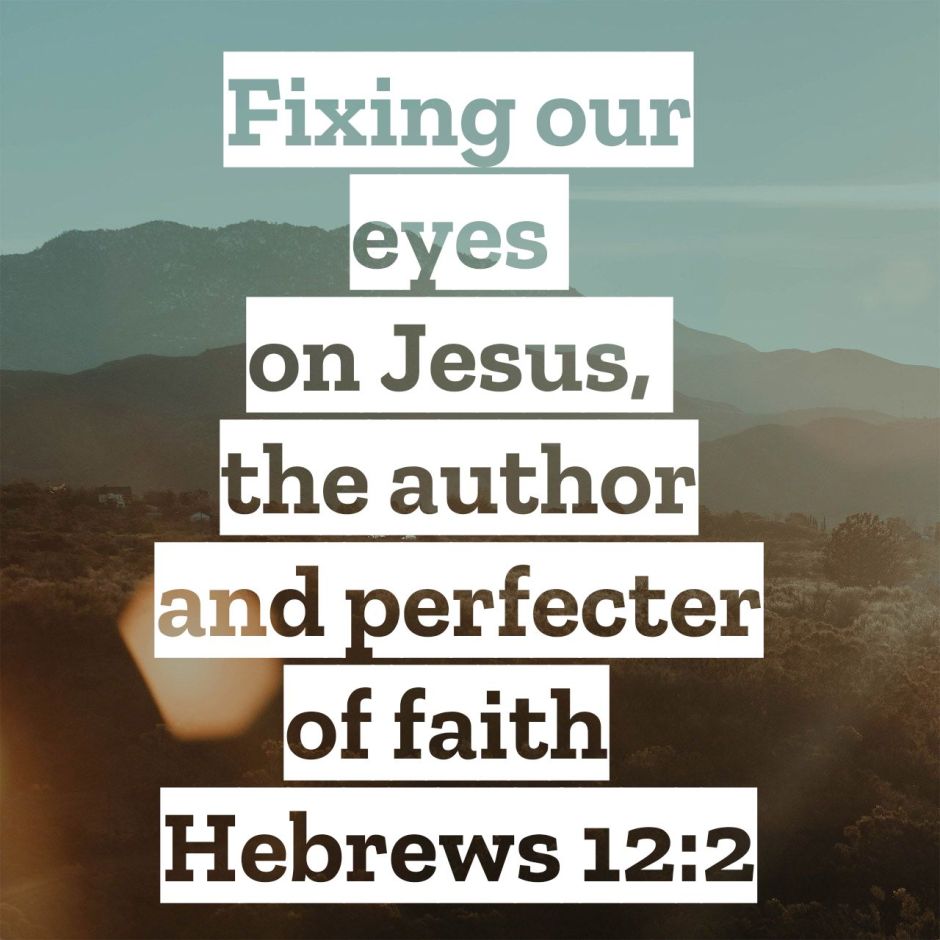
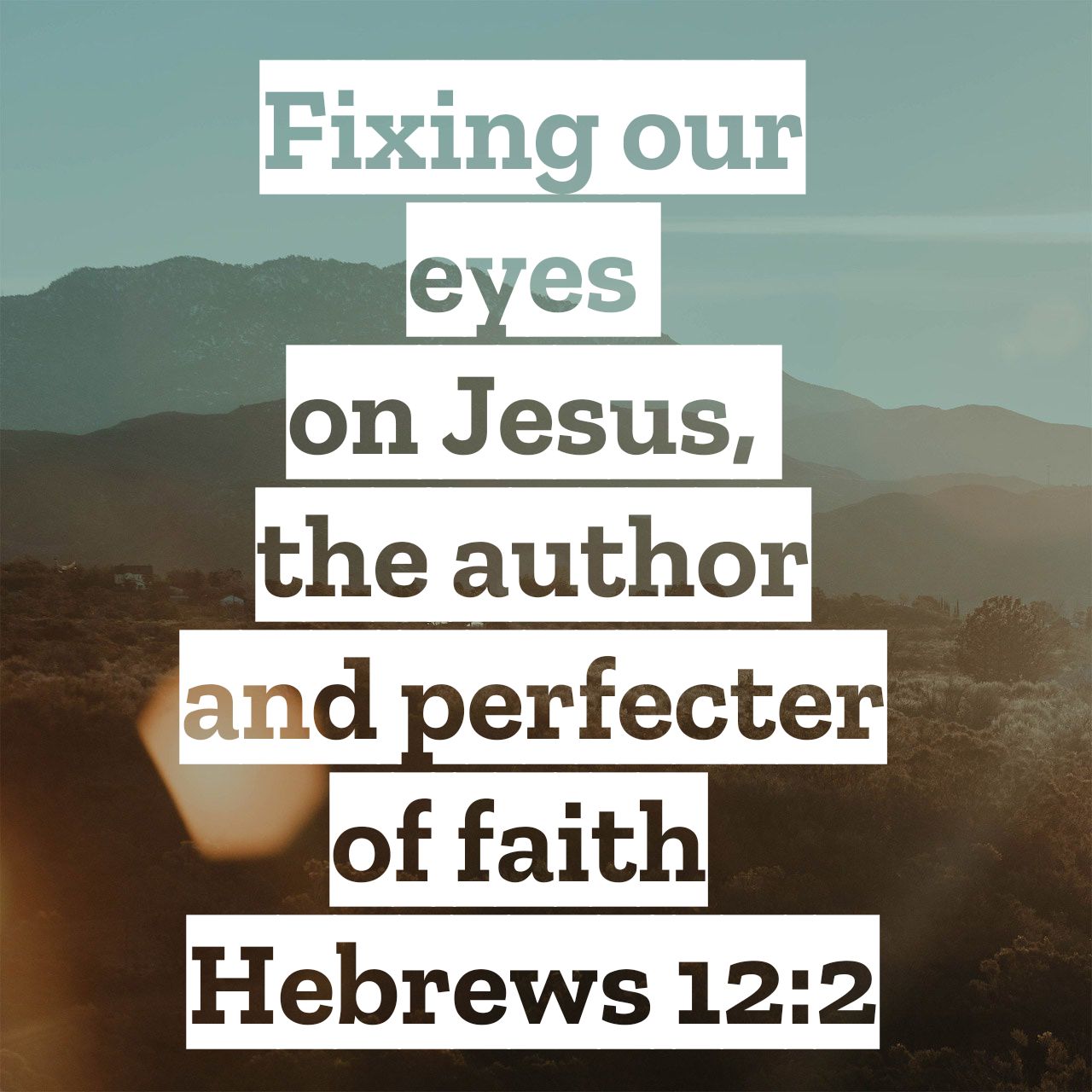
In Hebrews 12:1-2 (ESV), we are told to “lay aside every weight, and sin which clings so closely, and let us run with endurance the race that is set before us, looking to Jesus, the founder and perfecter of our faith, who for the joy that was set before him endured the cross, despising the shame, and is seated at the right hand of the throne of God.”

I love this passage. Really, I love all of Hebrews 12. (I give you permission to stop right now and go read all of Hebrews 12, then come right back!)

Looking at various translations of Hebrews 12:2, KJV and NKJV translates “founder and perfecter” as “author and finisher of our faith,” and NASB translates it “author and perfector of faith.”

In English I see a connection between Jesus having all authority in heaven and earth, and Jesus being the author and finisher of faith.

Jesus wrote our faith and Jesus finished our faith. He is our perfect example. He is both the main character and He is the author. All things were made through Him and for Him.

Because Jesus has been given all authority in Heaven and on earth, so we must obey His commands and walk in His ways. And because He is the author and the finisher of our faith, we can place our complete trust in Him, looking towards Him as we run with endurance this race that He has set before us.

How does Jesus having all authority encourage you?

How does Jesus being the author and perfector of faith strengthen you to run with endurance the race God has set before you?

What is God calling you to do — or not do — today?

TWIG