Read the Bible in 2 Years: Psalm 8, 1 Chronicles 7-8
1 Chronicles 1-8 is a listing of all the genealogies of the nation of Israel, yet Zebulun’s family isn’t listed. Why? Does it matter? Here are my thoughts:
Why isn’t Zebulun’s Genealogy Listed? Does it Matter? ✍️ 📖 – FormerAtheist58
He Knows My Name – Maranatha
Would you like to receive my daily blog posts sent directly to your email? Subscribe for free by entering your email below.
Read through the Bible in 2 Years: Psalm 4, Romans 15-16
At our church’s women’s retreat several years ago, I shared two messages from Romans 15:5-6, “May the God of endurance and encouragement grant you to live in such harmony with one another, in accord with Christ Jesus, that together you may with one voice glorify the God and Father of our Lord Jesus Christ.”
God has designed each of His children to be unique individuals as well as valuable parts of His united body.
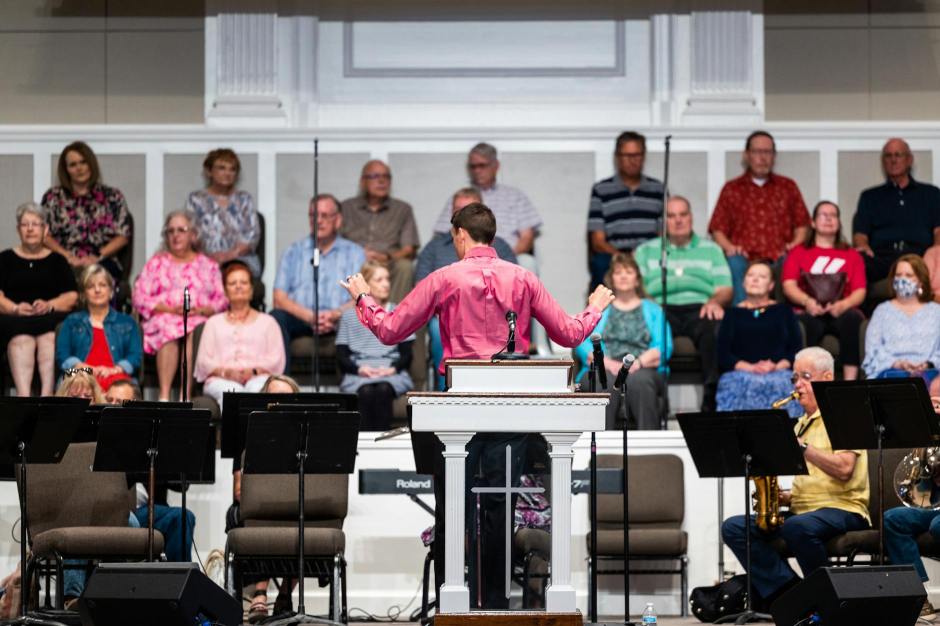
Heavenly Father, Thank You for creating me. Help me to remember that I am Your creation, that You have purpose for my life, that there are good works designed especially for me to do. And thank You for making me a member of Your body. Knit together the lives of Your children that we will glorify You, each singing our own more into one harmonious voice. Make us an orchestra of praise to You. Amen.
Read through the Bible in 2 Years: Psalm 3, Romans 14
Pray with me.
Heavenly Father, May my life be lived daily “in honor of the Lord.” Whether I eat or whether I abstain, let me be fully convinced in my own mind, walking by faith and not by flesh. I want to be prepared to give an account to You for how I have lived. I am thankful that You are my judge because You are impartial and righteous and merciful and wise, and I am selfish and foolish and petty. I am not my brother’s judge. You are. You are the all-knowing, all-righteous judge of the world. I pray that I will pursue what makes for peace and building up the body in unity and holiness. I pray that I would not do anything that would cause my brother or sister to stumble. May the body of Christ be pure and holy, without blemish, in word, thought, and deed, to the glory of Your Name, and may that begin with me. In the perfect name of Jesus Christ, my Lord and Savior I pray. Amen.
Read through the Bible in 2 Years: Psalm 113, 2 Samuel 12
In reading 2 Samuel 12, I noticed how quick David was to say, “As the Lord lives, the man who has done this deserves to die,” not realizing that Nathan’s story about a rich man who stole a poor man’s little lamb was about him. How easy it is for me to see sin in others while willingly overlooking it in myself. That reminds me of one of my favorite parts of C. S. Lewis’s book, “Mere Christianity.”
I remember Christian teachers telling me long ago that I must hate a bad man’s actions but not hate the bad man: or, as they would say, hate the sin but not the sinner. …I used to think this a silly, straw-splitting distinction: how could you hate what a man did and not hate the man?
But years later it occurred to me that there was one man to whom I had been doing this all my life — namely myself.
However much I might dislike my own cowardice or conceit or greed, I went on loving myself. There had never been the slightest difficulty about it…
Christianity does not want us to reduce by one atom the hatred we feel for cruelty and treachery. We ought to hate them…. But it does want us to hate them in the same way in which we hate things in ourselves: being sorry that the man should have done such things, and hoping, if it is anyway possible, that somehow, sometime, somewhere, he can be cured and made human again.”
C.S. Lewis, Mere Christianity
Heavenly Father, Forgive me for being quick to judge and slow to serve. Forgive me for being quick to see the speck in my brother’s eye while being slow to see the log that is in my own. Help me, please, to labor diligently to dig that log out, so that I can help my brother and glorify You, my perfect king. Help me to heed the words of Galatians 6, that I would restore with gentleness my brothers and sisters who are caught in any transgression, helping to bear their burden with humility and wisdom. Give me wisdom to talk to my Christian sisters and brothers with boldness, compassion, love, and empathy, remembering the words of Titus 3 that I myself was once foolish, disobedient, and led astray, a slave to various passions and pleasures, passing my days in malice and envy, hated by others and hating one another, that I was not saved because of my own righteous works but according to Your own mercy. Help me to remember that apart from Your incredible grace, I could fall as hard and far and fast as David did. It is by Your grace that I stand and by Your grace that I pray. In the Name of Jesus. Amen.
Why do you see the speck that is in your brother’s eye, but do not notice the log that is in your own eye? Or how can you say to your brother, ‘Let me take the speck out of your eye,’ when there is the log in your own eye? You hypocrite, first take the log out of your own eye, and then you will see clearly to take the speck out of your brother’s eye.
Read through the Bible in 2 Years: Psalm 112, 2 Samuel 11
Have you ever gone to a corn maze (or a sorghum maze if you’re in the south)? I’ve taken my kids a few times and discovered I really don’t like them. I hate how easily one wrong turn can lead you down the wrong path, forcing you into another wrong turn and another, until you finally find yourself at a dead-end where you then have to try retracing your steps to get back where you were 30 minutes ago. I’m just not a fan. How about you?
In reading 2 Samuel 11, I couldn’t shake how many times someone could have made a different choice and changed the whole course of events. Chapter 11 begins with the words, “In the spring of the year, the time when kings go out to battle, David sent Joab, and his servants with him, and all Israel. And they ravaged the Ammonites and besieged Rabbah. But David remained at Jerusalem.”
What if David simply had gone to battle instead of staying home?
Then David “arose from his couch and was walking on the roof of his home late in the afternoon.”
What if David had been commanding his armies or counseling his people?
What if David had spent the afternoon in prayer and Bible study?
So often in life it’s how we spend our leisure time that really trips us up!
When we’re worn out, worn down, and trying to relax, what do we do? What do we turn to? Food, Facebook, or the phone? Sex, shopping, or scrolling? How differently things could’ve been in David’s life if he’d spent his afternoon differently.
Then David sees a beautiful woman bathing.
Accidentally seeing someone bathing is not a sin, but what if this wasn’t the first time David had gone up to his roof and noticed Bathsheba.
Had David made an intentional choice to go up on his roof, hoping that he would see Bathsheba?
And what about Bathsheba? Was it really just an accident that she was bathing in the afternoon in such a place that the king who lived nearby would see here?
We don’t know, but how different things could’ve been if Bathsheba had bathed somewhere else or had been more careful to shield herself from David’s view.
And then David sent a messenger to find out more about the woman, and he is told that she is the wife of one of his mighty men, Uriah the Hittite.
Why did David send someone to find out more about her? Was he planning to take her as another wife or maybe a concubine?
But then, I wonder, how did David not know who she was? Bathsheba was the wife of Uriah, one of his chosen mighty men (2 Samuel 23:8-9) the daughter of Eliam, also one of David’s chosen mighty men, (2 Samuel 23:34) the granddaughter of Ahithophel, one of David’s chief counselors (2 Samuel 23:34, 2 Samuel 15:12), and she lived near enough to David’s home that he can see her clearly from his roof. Did he really not know who that bathing woman was?
What if David had never inquired of her? David had more than enough wives already. Surely he didn’t need to find out anything about this beautiful young woman.
Next David sends someone to take Bathsheba to his palace and she becomes pregnant.
What if the messenger had refused to help David?
What if Bathsheba had refused to come, preferring shame, imprisonment, or even death to breaking her marital vows?
What if she had fled like Joseph had when Potiphar’s wife tried to get him to lie with her and he ended up in prison? (Genesis 39)
By the way, this phrase, “David sent messengers and took her,” reminded me of 1 Samuel 8 when the Lord warned the Israelites through the prophet Samuel about the troubles that a king would bring upon them. This same Hebrew word for “take” is used again and again in 1 Samuel 8. The king will take their sons and their daughter, their fields and their grain, their servants and their donkeys. And here, David, the king, has taken even the wife of one of his most valuable warriors.
Then David asks Joab to bring Uriah back home, hoping that Uriah would spend some time with his wife, so no one would find out how she had become pregnant.
Like Adam and Eve in the garden of Eden after they had taken the forbidden fruit, David chose to hide his sin.
Maybe David was afraid of hurting his friend, Uriah.
Maybe David was afraid of losing his position as king.
Maybe David was simply afraid of losing face.
What if David had come clean at this point and repented of his sin?
What if David had brought Uriah home so that he could confess his sin to him and seek his forgiveness?
Proverbs 28:13 ESV says, “Whoever conceals his transgressions will not prosper, but he who confesses and forsakes them will obtain mercy.” Think of how differently this story would’ve ended if David had confessed his sin and sought mercy from Uriah and Bathsheba.
Next when Uriah refuses to go home to be with his wife, then David tells Joab to “set Uriah in the forefront of the hardest fighting and then draw back from him, that he may be struck down and die.” (11:15) and Uriah was killed in battle.
What if Joab had refused to be a party to this?
People might say, “Joab HAD to obey the king,” like they say that Bathsheba had to obey the king.
Don’t believe those lies. You DON’T have to do it. You don’t. Sure, you might get in trouble. Yes, you might face some embarrassment or other consequences, even severe, or life-threatening consequences, but no one ever has to choose sin.
Shadrach, Meshach, and Abednego were thrown into the fiery furnace (Daniel 3) because they refused to bow down to the king’s golden idol.
Daniel was thrown into a den of lions (Daniel 6) because he refused to stop praying.
God will always provide a way of escape (even if it’s death) that you may be able to withstand temptation. Read 1 Corinthians 10 for more on this.
David’s sin hurt lots of other people: Uriah, Bathsheba, the child Bathsheba bore, not to mention David’s other wives and David’s other children, as well as Joab and the Israelite army and the list goes on and on. But so does ours.
When we lie or cheat or boast or complain, we hurt other people.
When we think malicious thoughts about others and make plans in our minds to hurt them, we are hurting them as well as ourselves and others. We have got to remember that those people were made in the image of God and when we put our desires above them, it hurts them and it hurts God.
David knew that what he was doing was wrong. David knew the Ten Commandments. He knew it was sin to covet his neighbor’s wife and commit adultery, but he did it and then tried to cover it up. He knew God had said DO NOT MURDER. That’s why he had Joab arrange the murder for him.
Your sin might not look like David’s sin. Maybe you will never get another man’s wife pregnant or have anybody killed, but your sin separates you from God just as much as David’s sin did.
“For from within, out of the heart of man, come evil thoughts, sexual immorality, theft, murder, adultery, coveting, wickedness, deceit, sensuality, envy, slander, pride, foolishness. All these evil things come from within, and they defile a person.”
Mark 7:21-23
God was displeased with David’s sin, and God is displeased with our sin, too. God made a way for David to be saved, and God made a way for us to be saved, too.
As we will read tomorrow, David’s innocent son died, but so did God’s. God sent His own Son in the flesh, Jesus Christ, fully God and fully man, to be born as a human baby, to live a perfect and sinless life and to die on the cross to pay the punishment that our sins deserve. And He promises to us eternal, abundant, new life in Christ – AS SOON AS we trust in Him His Holy Spirit comes to dwell in us, to be our ever-present help, our ever-present counselor … and for all eternity to dwell in heaven with Him.
David needed to repent, to turn away from his sins, and so do we. The only way we can do that is to place our trust in the Lord and seek Him for strength to overcome temptation moment by moment and day by day. David fell because he had stopped seeking God; his eyes were on earth instead of on heaven.
Let’s pray and ask God to help us to resist the devil and submit to Him.
Heavenly Father, I need Your help. I can’t do it on my own. My spirit is willing but my flesh is weak. Help me to trust You moment by moment. Help me to be so careful how I spend my leisure time. Help me to get the rest I need so I can be strong in the moment of temptation. Help me to resist the devil and submit to You. Help me to see that way of escape that You will provide for me each and every time. Help me to be in Your Word day after day, remembering that it is my weapon to fight against the devil. Help me to hold up that shield of faith so I can extinguish all the flaming darts that the evil one throws my way. Help me to fasten the belt of truth firmly around my waist and strap the breastplate of righteousness tightly to my chest. Give me the strength and courage I need to stand firm and fight this battle, so that I will not bring shame to Your name. I love You, Lord. You are worth the fight. Death is not the worst thing. Denying You whether in word or deed is. Help me, Lord, for the glory of Your Name. Amen.
Read through the Bible in 2 Years: Psalm 109, 2 Samuel 8
Reading 2 Samuel 8, we see that David is having great victory over his enemies! The Philistines are finally being subdued. Many Moabites are defeated, but some are spared. Side note: I wonder if that’s because of David’s Moabite heritage (Ruth) or because they helped care for his parents (1 Samuel 22:3-4). King Hadadezer and his army are defeated all the way to the north at the Euphrates River, and 22,000 Syrians were struck down. And the list continues.
“And David made a name for himself…” “David reigned over all Israel. And David administered justice and equity to all his people.” (2 Samuel 22:13a, 15)
But, then, the chapter ends with verses 16-18, a list of his team, who was over his army, who was his recorder, who were his priests, who was his secretary. Even David’s sons were helping him. Another side note: the ESV refers to David’s sons as priests, but many other translations say they were his chief rulers or officials, and 1 Chronicles 18:17 ESV reads, “David’s sons were the chief officials in the service of the king.”
We mustn’t forget the importance of having a team to serve alongside us. Yes, we need God! Yes, God was working these great things through David. But David had a whole team of people working with him, helping him to achieve these incredible feats.
Sometimes it takes more work to involve a team. Sometimes it’s easier to just “do it all yourself.” But we need to remember that in the long term, we can achieve more, with longer lasting effects, when we involve others in the process.
Where do you need to ask for help? Who do you need to thank for the help they’re giving? How can you expand your reach by bringing in more people to serve with you?
Heavenly Father, and thank you for the body of Christ. Thank you for making different people with different gifts, some to be heads and some to be hands and some to be feet, some to be mouths or eyes or ears. Please help me to recognize the many people who have helped me to get to where I am today. Help me to be truly thankful for them and to welcome in even more. Protect Your kingdom from the devil’s schemes of division and pride and envy. In the name of Jesus Christ, our great high priest and Savior. Amen.
Read through the Bible in 2 Years: Psalm 102, 1 Samuel 29-31
1 Samuel 29-31 meets 1 Corinthians 12-13.
Heavenly Father, help us to love one another and to recognize that everything that we have is a gift from You. Make us active members of the body of Christ here on earth, willingly sharing our time, talents, treasures, and testimonies, with all who need them. You are the only all-powerful One and You alone are worthy. In the Name of Jesus Christ, Your Son. Amen.
Read through the Bible in 2 Years: Psalm 95, 1 Samuel 18-20
Have you ever been envious of someone? Have you ever been upset when someone else got something that you didn’t? Someone else got a real Cabbage Patch doll, but you didn’t. Someone else had a new pair of Jordans, but you didn’t. How about when someone else got a promotion at work or an award at school, while you were passed by? Or maybe that guy you liked asked out your best friend instead of you? Envy rears its nasty head in all kinds of places and all kinds of ways.
As 1 Samuel 17 ends and 1 Samuel 18 begins, Saul asks David to lead his army, and yet Saul is very angry when he hears the women celebrating and singing David’s conquests. Even though the women sang of Saul defeating thousands, that’s not good enough when compared to David’s ten thousands, “and Saul eyed David from that day on” (1 Samuel 18:9 ESV).
Unfortunately, I have witnessed similar animosity and envy between Christian individuals, ministries, and churches. Rather than seeing one another as God’s fellow workers, linking arms together, all too many Christians are jockeying for position – judging their own success by getting more members, more followers, or more likes. Their concern isn’t for the purity and spread of the gospel. Their concern is for the popularity of their own personal ministry.
Let us not be like Cain, “who was of the evil one and murdered his brother. And why did he murder him? Because his own deeds were evil and his brother’s righteous” (1 John 3:12 ESV). Rather, let’s be like Paul, who wrote, “He who plants and he who waters are one, and each will receive his wages according to his labor. For we are God’s fellow workers. You are God’s field, God’s building” (1 Corinthians 3:8-9 ESV). Remember that love is patient and kind, not envying or boasting, nor being arrogant or rude (1 Corinthians 13:4-5 ESV). Let’s “rejoice with those who rejoice” and “weep with those who weep” (Romans 12:15 ESV) instead of being mad at those who rejoice and rejoicing at those who weep.
Envy is the way of the Pharisees (Mark 15:10), the way of the world, but not the way of Christ and His followers.
Heavenly Father, Thank You for the body of Christ here on earth. We pray for each and every member, each and every pastor, teacher, ministry leader, church planter, every one bearing the name of Christ around the world. We pray that You will unite them to Your Word, to the gospel, and to one another. Protect us from the enemy, our adversary, the devil who wants to bring division and confusion and darkness. Keep us from envy and backbiting. Keep us on the straight and narrow path. Keep us close to the cross. For Your glory and our good, we pray. Amen.
Alas Did My Savior Bleed at the Cross – Justin Hill – Ed Sullivan
Before closing out, I want to give a “shout out” to some national ministries that have been great blessings to me.
David Guzik’s Enduring Word – I’ve used many of his resources when I’m studying for teaching at Community Bible Study. I love that I can choose to read, watch, or listen since his site includes written material as well as videos and audio downloads. You can even find links to his teachings on the Blue Letter Bible website and app by clicking on “commentaries.”
Truth for Life with Alistair Begg – I love how Mr. Begg teaches expositionally through the Bible verse by verse with passion and application.
Got Questions – A great resource when you’re researching something. For example, their article called, “What does the Bible have up say about envy?” ends with this paragraph. “The root of envy is a dissatisfied heart. We experience envy when we cannot have what our heart desires. We have not yet learned the secret of contentment (Philippians 4:10–13), of delighting ourselves in the Lord. The most effective way to avoid envy is to trust in the Lord and delight in Him: ‘Trust in the LORD and do good; dwell in the land and enjoy safe pasture. Take delight in the LORD, and he will give you the desires of your heart. Commit your way to the LORD; trust in him and he will do this: He will make your righteous reward shine like the dawn, your vindication like the noonday sun” (Psalm 37:3–6).'” Amen!










 Teach What is Good
You must be logged in to post a comment.